
Introduction to Noir Photography,
Noir photography is an art that captures the essence of human emotions. These are Portraits Noir.
Among the various photographic genres, high-contrast portraits, where shadows dominate the light, offer a unique allure.
This style, characterized by strong drama and noir influences, evokes deep and intense emotions.
But what makes these portraits so captivating, and how can you create such images?
Let’s explore the dark side of photography.
Before we delve deeper, I recommend checking out my article on high-contrast street photography.
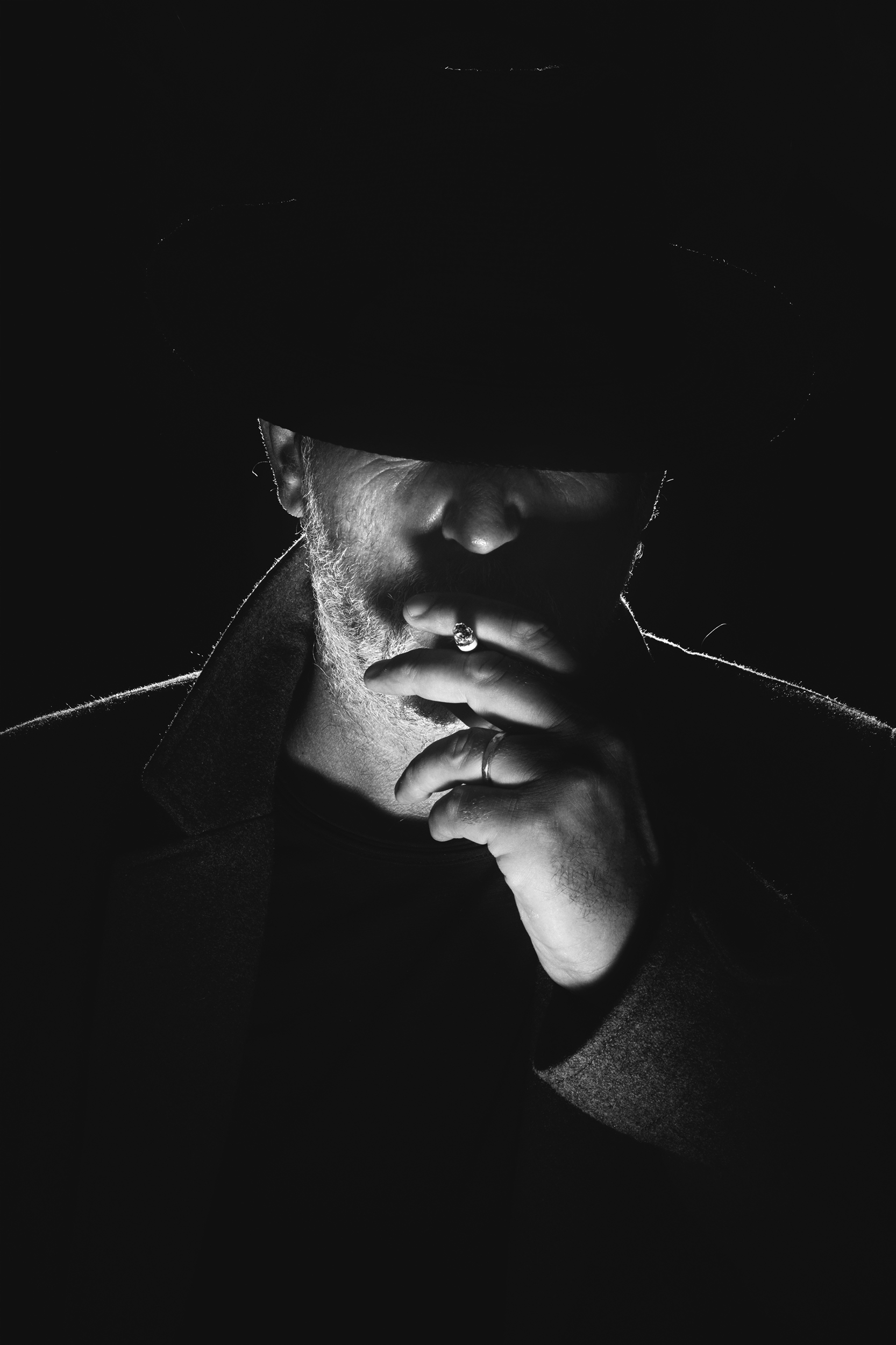
Noir Photography: The Allure of Dramatic Portraits.
What are they?
Dramatic and noir portraits are characterized by the predominant use of shadows and the sharp contrast between light and darkness.
This style draws inspiration from film noir and street photography, where the interplay of light and shadow tells complex and intense stories.
Why Are We Attracted to This Photographic Genre?
Mystery and Intrigue: Shadows conceal more than they reveal, creating a sense of mystery that captures the imagination.
Deep Emotions: This style highlights intense and hidden emotions, making the subject more captivating.
Psychological Resonance: Images that evoke strong emotional responses, such as fear or melancholy, tend to remain etched in memory.

Techniques for Creating Dramatic and Noir Portraits.
Lighting
Direct and Intense Lights: Use intense, direct light sources to create sharp shadows. Positioning a light source to the side of the subject can enhance the shadows on the face.
Backlighting: Place a light source behind the subject to create silhouettes and bright edges that add depth.
Rembrandt Lighting: A classic technique where the light creates a triangular patch of light under the eye opposite the light source, producing a three-dimensional effect.
Setting and Background
Dark and Neutral Environments: Dark or neutral backgrounds keep the focus on the subject and its shadows, creating a more intense atmosphere.
Minimal Details: Reduce details in the surrounding environment to avoid distracting the viewer and maintain focus on the subject’s expressiveness.
Post-Production
Contrast and Saturation: Increase contrast and reduce color saturation to intensify the dramatic effect.
Dodging and Burning: Selective lightening and darkening techniques to emphasize highlights and shadows, guiding the viewer’s eye.
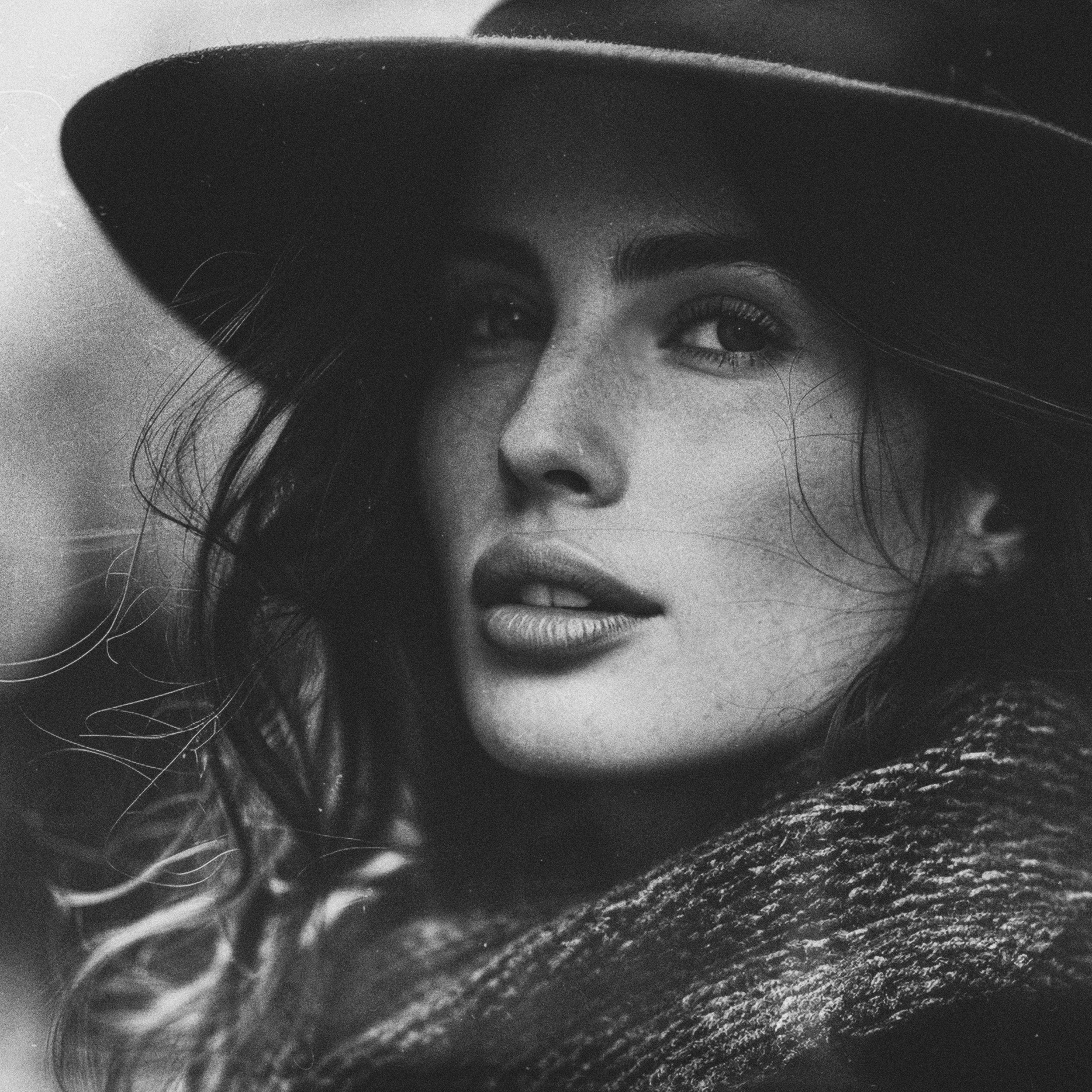
Emotions and Narratives in Noir Portraits
- Fear and Tension: Deep shadows and sharp contrasts can evoke feelings of fear and tension.
- Introspection and Solitude: Darkness represents solitude and reflection, creating an emotional connection with the viewer.
- Strength and Vulnerability: Lighting highlights both the strength and vulnerability of the subject, creating a complex and nuanced portrait.
Conclusion.
The allure of dramatic and noir portraits lies in their ability to combine technique and visual storytelling to create powerful and memorable images.
This style, which uses darkness and contrast to express deep emotions, continues to captivate photographers and viewers around the world.
Examples and Inspiration.
- Famous Photographers: Yousuf Karsh, Richard Avedon, and Helmut Newton are just a few of the masters renowned for their dramatic portraits.
- Film and Literature: Film noir and literary works have profoundly influenced this visual genre, providing endless sources of inspiration.
Call to Action.
Experiment with high-contrast photography, play with light and shadow, and discover how these techniques can transform your portraits into dramatic and compelling works of art.
Draw inspiration from the great masters and let yourself be moved by the emotions that shadows can evoke.

Glossary.
- Rembrandt Lighting: A technique where the light creates a triangular patch of light under the eye opposite the light source.
- Dodging and Burning: Post-production techniques used to selectively lighten (dodging) or darken (burning) areas of a photo.
Writing about dramatic and noir portraits is not only a journey into the art of photography but also an exploration of deeper human emotions.
Let the shadows tell your stories.
As always, I remind you that you can find all my article here.
I encourage you to subscribe to the blog (for free) qui.
A hug,
Leo
