
AI Blog
The topic of artificial intelligence has been the subject of heated debates in recent months. However, I noticed that lately it is no longer discussed with the same emphasis as before.
Therefore, I have decided to explore this topic by enrolling in one of the most renowned image generators: midjourney
First, though, I want to leave you 2 links where you will find some interesting things:
Now let’s get into the heart of the article.
How Midjourney AI Works.
You probably already know about this AI platform, but for those who are not aware, let me briefly summarize it: Midjourney is a platform that generates images in response to specific prompts, meaning specific instructions.
The true skill of an AI artist lies in the ability to provide appropriate prompts to generate images as realistic as possible.
Setting aside the debate on whether they are “fake,” personally, I find that the images produced by Midjourney have one main characteristic: they are striking.
Not just Midjourney.
In the same period when I was testing Midjourney, another platform was launched as well. Adobe FireFly : another significant entry into the world of AI.
I would like to emphasize that these platforms still exist today and continue to evolve.
However, I believe it’s challenging to assess how interesting they are for those involved in traditional photography.
AI in Practice: Portraits.
With that said, I would like to show you some examples of artificial intelligence, starting with portraits, which is my area of expertise.


Take a look at this image, generated with Midjourney. What do you think?
It’s the classic example of an image that elicits a “wow” effect, but with a small flaw: it’s immediately noticeable that it was created by artificial intelligence because it’s too perfect.
How to Improve Your AI Images.
However, it’s possible to customize it with some minor adjustments.
In this case, I increased the contrast and added some grain to create a typical analog effect reminiscent of old films: quite a difference, isn’t it?
But still, I believe we are far from reality.
Social and IA.
Yet, when I uploaded both versions to Instagram, guess which one received more likes?
It was actually the less artistic one, the more fake-looking one.
It’s interesting to note how a blatantly artificial image can be so appealing to those who can’t distinguish between reality and fiction. And believe me, there are many.
This type of image is extremely popular on social media and garners a large number of likes.
This could be a problem.
But one day I would also like to discuss this topic: social media, these modern plagues.
But let’s move on.
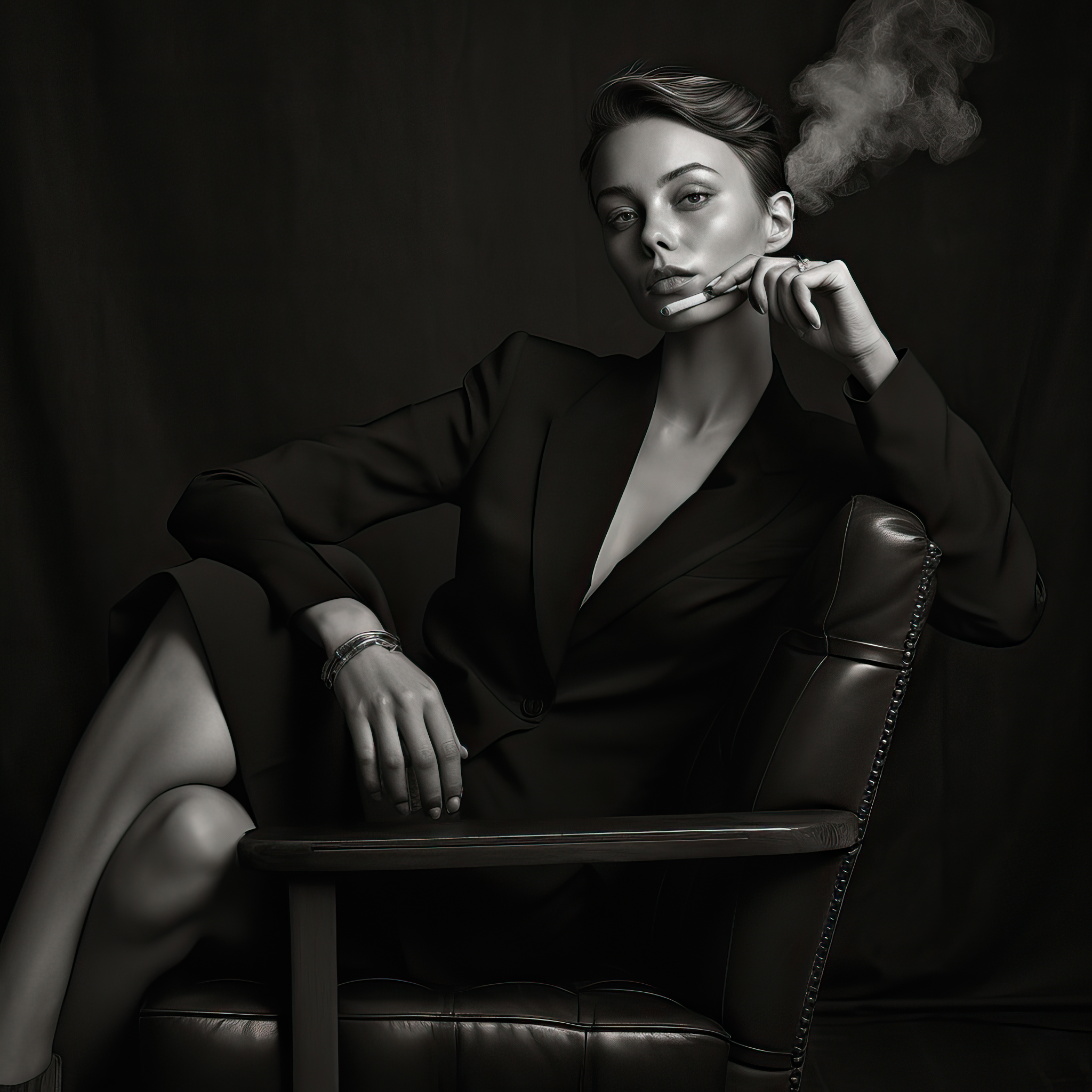
Here, we have several evident flaws: just look at the hands to notice them.
One of the main problems with using artificial intelligence for portraits lies precisely in rendering the hands.
They always present notable imperfections that would require the intervention of a skilled retoucher.
Despite this, even this image has garnered significant interest, receiving numerous likes and positive comments.
Once again, many fail to distinguish what is authentic from what is artificial.
Ahhh, these cursed social media. I told you I’ll talk about this one day, didn’t I?
However, from my brief experience, I’ve noticed that regarding portraits, there is still work to be done: skins are too smooth, imperfections on the hands, and so on.
Let’s be clear: I haven’t delved deeply into this matter, so I invite those who are more experienced in this field to share their perspectives in the comments.
AI in Practice: Landscapes.
Let’s see what happens when it comes to landscapes.

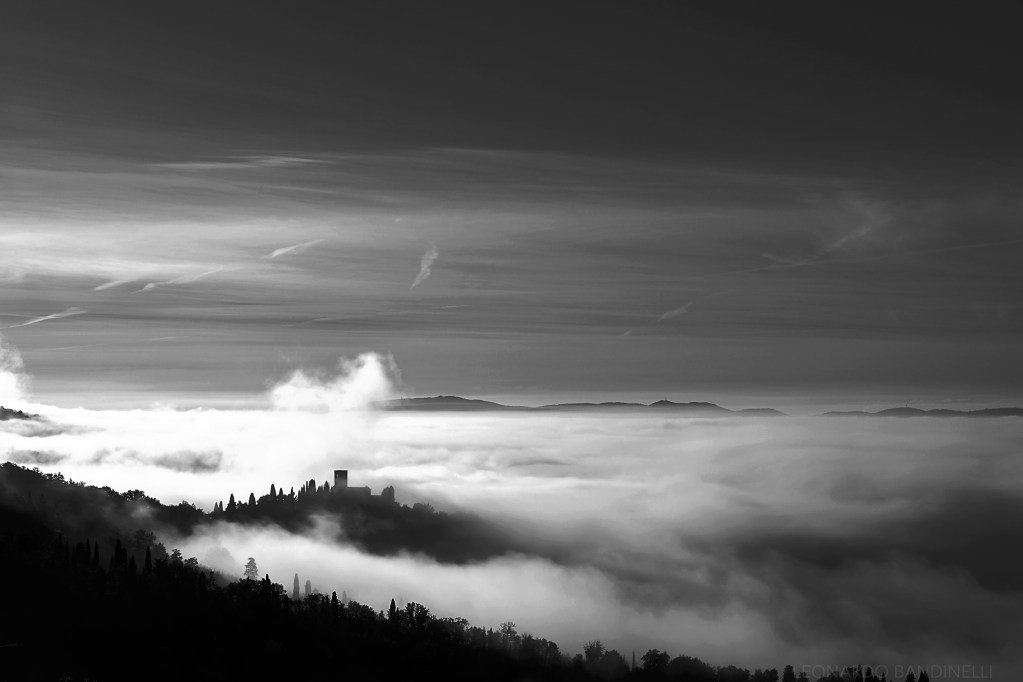
Here, in my opinion, things start to get serious, and it becomes more difficult to tell if an image has been created with AI.
The following image is real, but would you be able to tell by comparing it with the previous one?
AI in Practice: Street Photography.
Finally, let’s see how this AI performs with high-contrast street photography.


Would you be able to tell me which one is authentic? If you’re involved in photography, you should see it quite well.
Here, as with the landscapes, I’d say it’s pretty good. If I weren’t involved in photography, I’d have a hard time distinguishing between fiction and reality.
Analysis.
I would say that there is still much to be done for portraits, while for landscapes, we are already at a good level. Street photography falls somewhere in between.
There are many other genres to analyze, such as still life, but since I’m not involved in them, I haven’t examined them.
Who Should Be Concerned.
I want to show you now who, in my opinion, might be penalized with the advent of this technology:
Automatic Photo Retouching: AI-based software can perform automatic photo retouching faster than manual work. This could reduce the demand for professional photo retouchers for routine tasks.
Generation of Synthetic Images: As we’ve seen, AI can create realistic images from scratch or manipulate existing images in ways that would require a lot of time and manual skills. This could impact graphic designers working on projects involving image creation.
Automated Design: Some AI-based design tools are emerging, allowing the creation of logos, social media graphics, and other promotional materials without the need for advanced design skills.
Automation of Repetitive Processes: AI can automate many repetitive processes within graphic and photo production, such as noise reduction, contrast optimization, and color adjustment.
Some positive notes.
However, I want to point out how AI can create new opportunities, such as:
Assisted Creativity: AI-based tools can assist professionals in generating creative ideas and offering suggestions during the creative process rather than completely replacing human work.
Large-Scale Personalization: AI can be used to personalize images and graphic materials automatically, adapting them to the individual tastes and preferences of users.
Trend Analysis: AI can be employed to analyze large amounts of visual data, allowing professionals to better understand design trends and user preferences.
In conclusion.
In conclusion, although the introduction of AI may bring changes to the photography and graphic design industry, I don’t believe it’s necessarily harmful.
By saying this, I don’t mean to express support for this new technology. As someone who specializes in portraiture and street photography, I’ve shown you how far we still are from reality.
However, from what I’ve seen, I interpret it more as a transformation that will require industry operators to adapt in their creative processes.
In essence, yes, it could be helpful.
Well, the article ends here. I hope you enjoyed it. Before concluding, I can’t help but ask the fateful question:
What are your thoughts?
Best regards,
Leonardo
